
Hours vary the Central Coast (805) 430-6304
When Your Windows Are Telling You Something

Family-owned · Central Coast Local

4.9 from 69 Google reviews

When Your Windows Are Telling You Something

Five signs that it's time to stop patching around the problem and replace your windows and patio doors.

Call or text (805) 430-6304

Request an estimate

Tell us what you need

No obligation · Responds within 1 business day


By submitting this form you agree that we may contact you about your request and share your name and email address with partner companies for email marketing. We never share your mobile number or text message consent with third parties or affiliates for marketing or promotional purposes.

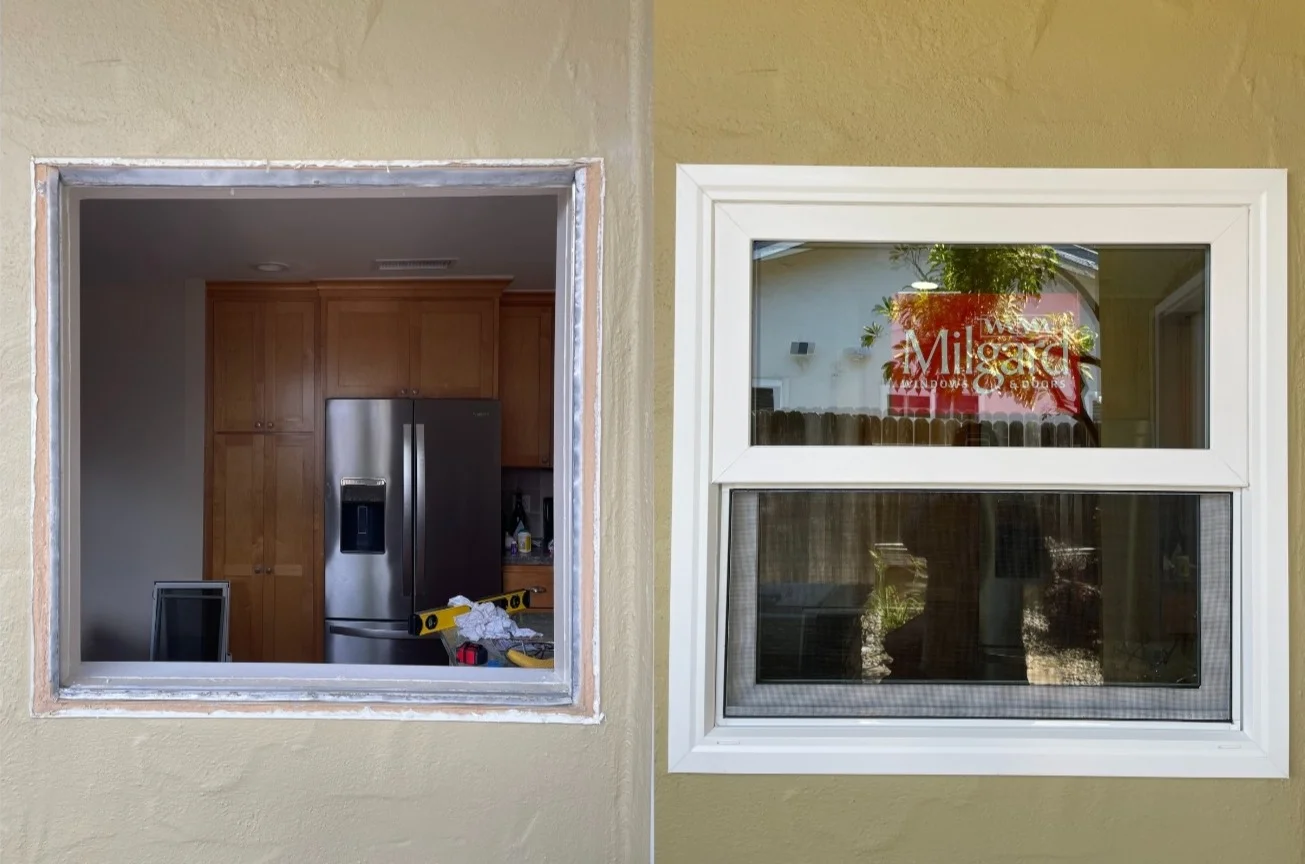
heat loss in winter work, project example in Buellton, CA

Signs Your Windows Have Reached Their Limit

Windows don't fail all at once. Usually they give you warnings, a chill near the glass in winter, a fogged pane you can't wipe clean, an energy bill that keeps climbing without explanation. Like most things in a house, knowing what to look for makes the difference between catching the problem early and living with it for another five years.

This guide walks through the most common indicators that your windows or patio doors have run their course. Not every symptom means immediate replacement, but taken together they usually point in one direction.

Your Home Stays Cold in Winter and Sweltering in Summer

If you're constantly adjusting the thermostat to compensate for temperature swings indoors, your windows may be a bigger part of the problem than you think. Drafts near the glass, rooms that refuse to stay warm in winter, or the west-facing bedroom that turns into an oven by August. These aren't quirks of the house, they're thermal performance failures. On California's Central Coast, that means homes in the Santa Ynez Valley dealing with 100°F summer afternoons, and coastal properties in Lompoc and Santa Maria where marine layer mornings leave everything damp and cold. Single-pane and older dual-pane windows handle neither extreme particularly well. Double-pane window replacement with modern low-e glass is designed specifically for these conditions, it keeps the heat where you want it, whichever side of the window that happens to be.
heat gain in summer work, project example in Buellton, CA

A Clear Warning Sign

Condensation or Fogging Between the Panes

Condensation on the interior surface of a window is normal in certain conditions, humidity, limited ventilation, cold glass. What is not normal is condensation or fogging trapped between the panes of glass. When you see that, the seal on the insulating glass unit has failed. Once the seal goes, the Argon gas that was filling the space between the panes, which is what gives double-pane glass most of its insulating value, dissipates into the air. What remains is a dead air space that fogs, streaks, and provides a fraction of the insulation it once did. The glass itself may look intact, but the unit is no longer doing its job. At that point the only real fix is replacing the window.
the seal failure effect work, project example in Buellton, CA

Energy Costs

Heating and Cooling Bills That Keep Rising

The Department of Energy puts the number at 25–30% of residential heating and cooling energy lost through windows. That's not a rounding error.

Heat Gain in Summer

Older windows without low-e coatings let solar heat pass straight through the glass. In the Santa Ynez Valley and Paso Robles wine country, where summer afternoons regularly exceed 95°F, that translates directly to air conditioning that runs longer and costs more.

Heat Loss in Winter

Single-pane windows conduct cold almost as efficiently as no window at all. Coastal communities see milder winters, but inland areas like Solvang and Buellton drop cold enough at night that poor window insulation becomes a real monthly expense.

The Seal Failure Effect

A failed seal doesn't just cause fogging, it destroys the thermal barrier between the panes. Once the Argon gas is gone, you're paying to heat or cool air that's bleeding straight out through the glass assembly.

When Replacement Pays Off

Modern double-pane windows with low-e glass and Argon fill are specifically engineered to cut the heat transfer that inflates energy bills. For many homeowners on the Central Coast, the savings on utility costs make window replacement a straightforward financial decision over a 10–15 year horizon.

Windows That Stick, Jam, or Won't Stay Open

A window that won't open smoothly is more than an inconvenience. Ventilation matters, particularly in coastal homes where you rely on cross-breezes to manage interior temperatures without running the air conditioner. And in any bedroom, a window that won't open freely is a blocked emergency exit. Sticking is often caused by wood frames that have swollen or warped from moisture exposure, a problem that accelerates on the coast with salt air and fog cycling. Painted-shut windows are common in older homes. Hardware failures, broken balances, stripped cranks, corroded tracks, are another category entirely, and they're a reason to evaluate whether repair or full window replacement makes more sense given the age of the unit. If you're propping windows open with a stick or simply leaving them closed because opening them isn't worth the effort, that's not something to keep living with.
heat loss in winter work, project example in Buellton, CA

Central Coast Conditions

What California's Climate Does to Older Windows

Windows in Ventura, Santa Barbara, and San Luis Obispo counties don't face the same conditions as windows in a dry inland climate. Salt air is corrosive, it works on aluminum frames, on hardware, on caulk lines. The marine layer brings persistent moisture that works into wood frames and degrades seals over time. UV exposure on south- and west-facing windows is intense year-round, and it breaks down frame materials and glazing faster than most manufacturers' warranty literature accounts for. Then there's the inland swing: communities like Buellton, Solvang, and Paso Robles see temperatures that vary 40–50 degrees between a summer afternoon and the same evening. That thermal cycling stresses seals and frames over years in ways that coastal properties don't experience. Understanding which failure mode applies to your home matters when you're thinking about what to replace windows with. Not just whether to replace them. You can read more about how vinyl and fiberglass windows compare in these conditions, or about whether energy-efficient windows are worth the investment for Central Coast homeowners specifically.
heat gain in summer work, project example in Buellton, CA

What to Do When You See These Signs

Take Stock of the Whole House

One failing window is a repair conversation. Multiple failing windows, especially if your home was built in the same era and the original windows are still in, is a replacement conversation. Note which rooms feel drafty, which windows fog, which ones stick.

Get Eyes on It Before You Decide

Buster and Aaron have been doing this for 35 years. An in-home estimate costs nothing and tells you more than any checklist. Call (805) 430-6304 and they'll come out, look at what you have, and give you a straight answer about what makes sense, repair, partial replacement, or full replacement.

Don't Wait for the Problem to Multiply

A failed window seal lets moisture in over time. A window that doesn't close properly is a security and weather exposure issue. The longer any of these problems persist, the more likely they are to affect adjacent framing and finishing work. Earlier is almost always cheaper.

Not Sure If Your Windows Need Replacing?

Call Buster and Aaron. They'll tell you honestly what you're working with.

Related

Next step

Tell us about the job

Your name, your number and what needs doing. A person from Mountain View Windows gets back to you.

Rather talk now?(805) 430-6304

No obligation · Responds within 1 business day


By submitting this form you agree that we may contact you about your request and share your name and email address with partner companies for email marketing. We never share your mobile number or text message consent with third parties or affiliates for marketing or promotional purposes.